


What is AWaRe?
AWaRe is a classification system (Access, Watch, Reserve), developed by the WHO, to help optimise antibiotic use and promote stewardship and policy interventions.

Why does AWaRe matter?
The AWaRe system aims to improve the quality of antibiotic use.
For patients, prescribers and dispensers of antibiotics the AWaRe system provides a framework to develop a range of interventions to improve use. The AWaRe antibiotic book provides detailed guidance on the drug, dose and duration of antibiotics for 35 of the most common infections in children and adults in both primary care and hospital settings.
For governments and policy experts, the AWaRe system is used to develop and implement national global quality indicators and targets of optimal antibiotic use.
The 2024 United Nations General Assembly High-level Meeting on AMR committed to a global target that 70% of all antibiotic use in humans should be from the Access group.
Access
- Clinically effective in treating most common infections in primary care and many hospital infections
- Generally:
- First-line choice for most common infections in primary care
- Less likely to lead to selection of resistance
- Lower cost
- Lower toxicity
Watch
- Clinically effective in treating more severe infections in hospital and specific infections in primary care
- Generally
- More likely to lead to selection of resistance
- Higher cost
- Higher toxicity
Reserve
- Clinically used to treat very severe infections in critically ill patients in hospital
- Generally
- Much higher cost
- Last resort antibiotics
Not recommended
- Not rational combination of medicines
- Generally
- Higher toxicity
- Higher cost
- Leads to selection of resistance
The WHO AWaRe system has developed a range of tools to support stewardship activities in the primary care and hospital settings as well as audit tools and educational programs.
How can I use AWaRe to improve antibiotic use?
The WHO AWaRe system can be used to help guide antibiotic prescribing and dispensing decisions. The WHO AWaRe Antibiotic Book provides detailed guidance on the choice of antibiotics for common infections in primary care and hospitals, also taking a risk based No Antibiotic Care approach to when it is safe and appropriate not to give antibiotics.
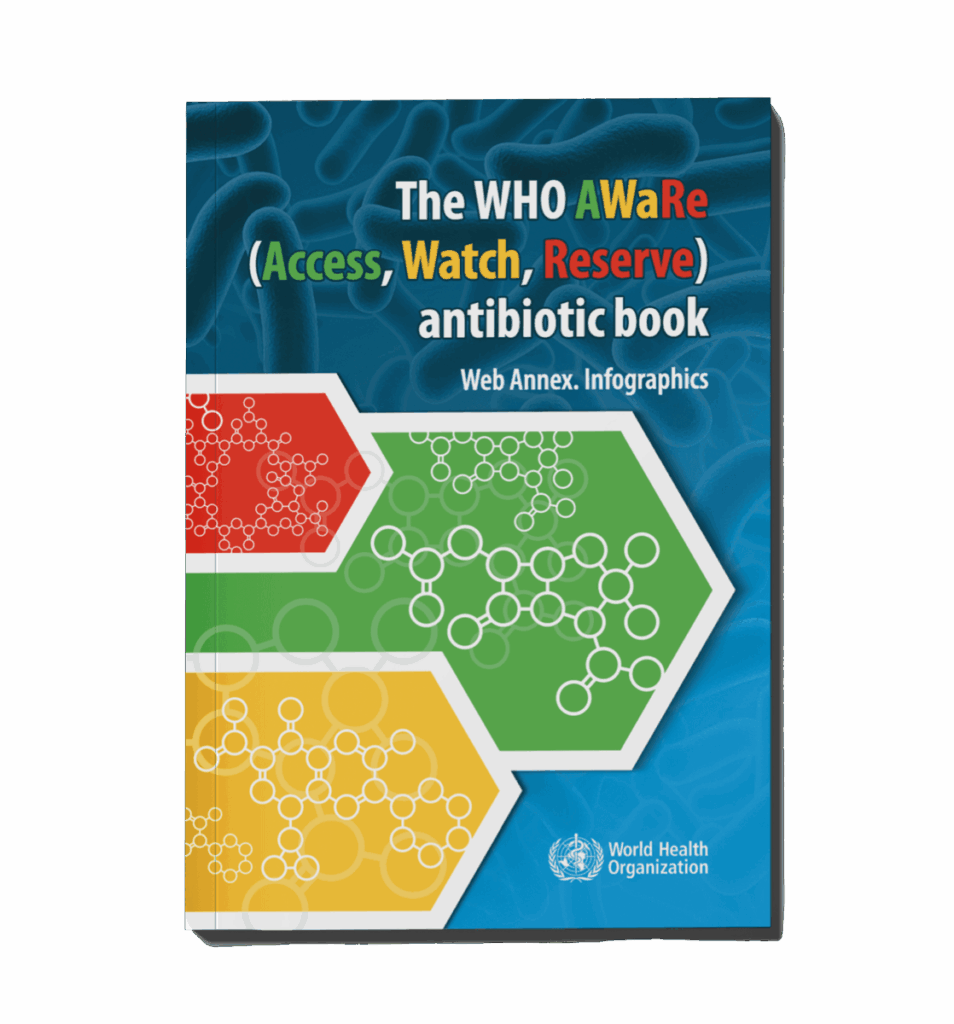
How to use the AWaRe system

Prioritise ACCESS antibiotics where appropriate.

Use WATCH antibiotics only for more severe infections where clinically indicated. Avoid empiric overuse especially in mild respiratory infections in primary care.

Restrict RESERVE antibiotics to only very severe infections. These should be a last-resort for confirmed or suspected multidrug-resistant infections.
The AWaRe system is endorsed by the UN General Assembly High-Level Meeting on AMR 2024 as the framework for the development and implementation of national and global antibiotic stewardship and policy.
Policy makers play a critical role in ensuring the effective implementation of the AWaRe system to combat antimicrobial resistance and promote rational antibiotic use. They can leverage AWaRe at national and institutional levels:

Include the AWaRe system in national treatment guidelines
- Adapt or adopt WHO AWaRe book guidance into National Antibiotic Treatment Guidelines
- Integrate the AWaRe system and the WHO Model List of Essential Antibiotics into national essential medicines lists.
- Prioritise Access antibiotics: Ensure first-line treatments for common infections in the primary care setting are mainly from the Access group.
- Restrict Watch/Reserve use: Define clear indications, e.g. severe infections, culture-proven resistance.

Strengthen regulatory and procurement policies
- Review over-the-counter sales: consider policies encouraging the use of Access antibiotics in primary care.
- Hospital formulary: Introduce AWaRe-based antibiotic prescribing in healthcare facilities.
- Procurement: Ensure Access antibiotics on the Essential Medicine List are widely available in a safe, effective and affordable formulation.

Implement antimicrobial stewardship programs
- Develop AWaRe based stewardship in hospitals including:
- Tracking AWaRe prescribing patterns, e.g. % Access vs Watch/Reserve use.
- Consider enhanced stewardship for Reserve antibiotics.
- Promote de-escalation after culture results.
- Develop primary care stewardship programs focussing on educational AWaRe based activities, audit and feedback.

Monitor and evaluate antibiotic use and resistance
- National surveillance systems:
- Introduce AWaRe based reporting into all antibiotic surveillance programs.
- Consider developing national targets:
- WHO recommends 70% of antibiotics used should be from the Access group.
- Review Watch group oral use in outpatient and primary care settings.

Promote public and healthcare worker education
- Build AWaRe-ness campaigns: Educate prescribers, pharmacists, and the public on AWaRe principles.
- Training programs: Include AWaRe in medical/nursing curricula and CMEs.

Promote compliance
- Global alignment: Report to the WHO/GLASS AMU (Global Antimicrobial Resistance Surveillance System)
Researchers play a crucial role in using and developing the AWaRe system as a standardised approach on antibiotic use and policy development.

Improving antibiotic stewardship programmes
The AWaRe system is now the most widely used method of reporting ASP globally. There is a clear need for more studies focussing on interventions based on improving the quality of AWaRe antibiotic use and tracking outcomes of varying interventions. This ideally would include a range of methodologies, including Randomised Controlled Trials.

Informing public health policies
- Data on AWaRe antibiotic use can help shape national and hospital-level antibiotic guidelines.
- Research can assess progress towards the WHO recommendations on prioritising Access antibiotics.
- Findings can support advocacy for reducing overuse of Watch antibiotics.

AWaRe antibiotic policy development
There is a need to integrate the AWaRe system into a wide range of antibiotic policy development and implementation, particularly on the use of AWaRe antibiotics in primary care.

Drug development and clinical trials
- Most new antibiotics active against Carbapenem Resistant infection are usually Reserve group antibiotics, but there is a need for more high-quality data on the clinical impact of their use.
- Pragmatic public health focussed clinical trials are needed to define the optimal choice of AWaRe drug dose and duration to maximise clinical effectiveness while reducing the selection of resistance, cost and toxicity.

Global surveillance and reporting
Standardisation of the AWaRe system enables cross-country comparisons of antibiotic use.
Researchers can contribute by analysing regional AWaRe data.